

Can Cats Eat Bacon? 6 Practical Facts and Safe Feeding Guidance
Learn if cooked bacon is safe, why raw bacon is risky, how much is too much, and healthier dry-food treats for your cat.
In short
Bacon is a salty, fatty, processed food for humans, and it is NOT formulated for cats. While bacon contains some vitamins and essential nutrients, the health risks often outweigh any benefit for a feline friend. A healthy cat can usually tolerate a tiny crumb of fully cooked bacon once in a while, but bacon should never replace complete and balanced dry cat food and should not become a routine treat.
If your cat does eat bacon, it must be in extremely small amounts. The average strip of bacon contains about 147 milligrams of sodium - already a significant portion of a cat’s daily sodium needs. You also need to subtract those extra calories from that day’s kibble portion so you do not quietly overfeed or increase fat content beyond the healthy diet range.
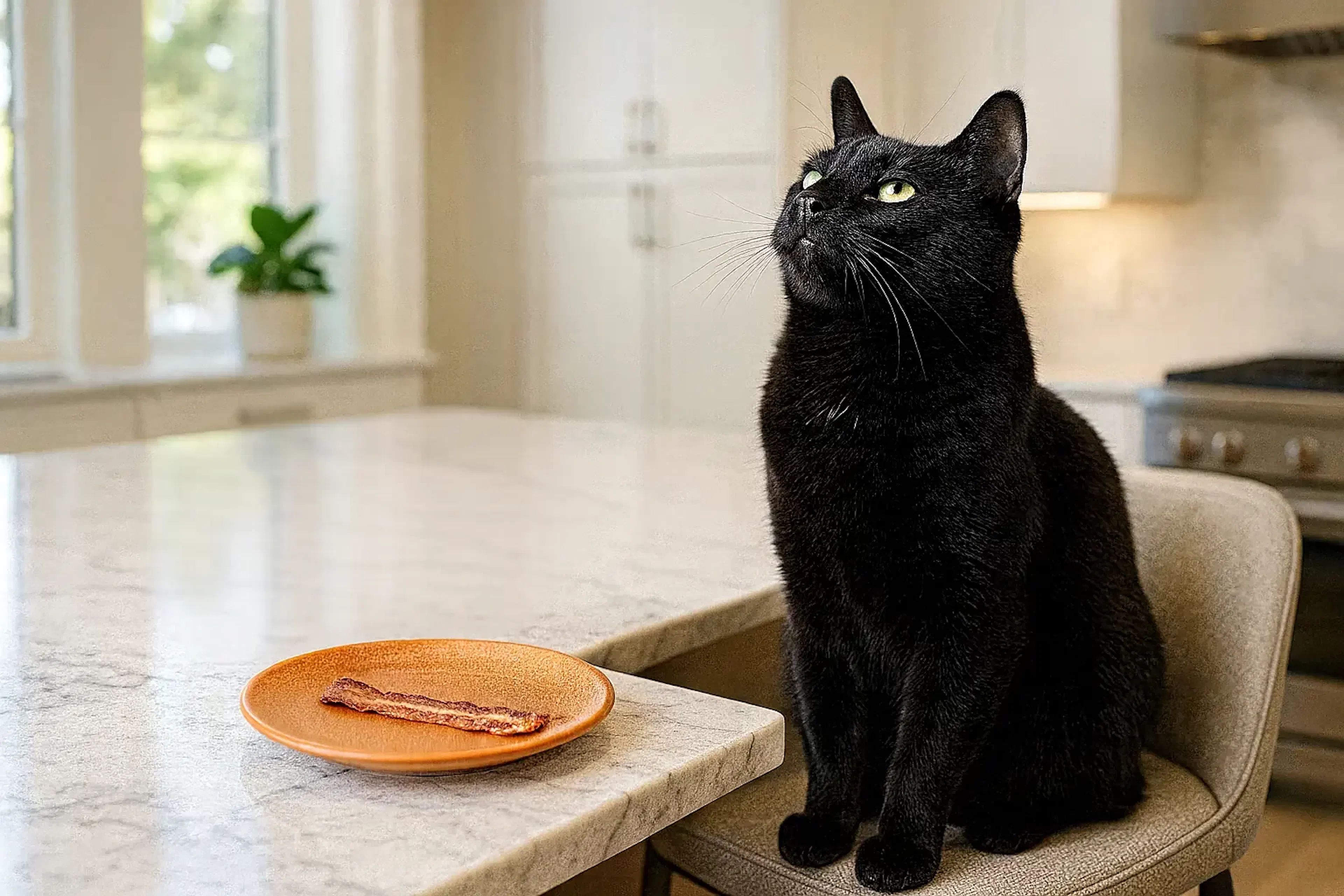
What exactly is bacon, and why do cats want it?
Bacon is pork that has been cured, smoked, and seasoned. That process makes it one of many processed meats, concentrating both fat and salt. Processed human foods often contain additives and preservatives that are not suitable for cats. It’s very different from the controlled nutrient profile of cat food, which is designed to provide complete protein, essential amino acids, vitamins, and minerals predictably.
Cats eat bacon because it smells like high-value meat. To a furry friend, it mimics “real prey.” Cats are obligate carnivores, meaning their diet should be predominantly meat-based and nutrient-balanced. The problem is that bacon lacks proper balance. It is not an “only food,” and it does not provide the complete, balanced nutrition your cat gets from dry cat food.
Can I give my cat a small piece of cooked bacon?
You should not make bacon a habit, but a tiny crumble of fully cooked bacon is unlikely to harm most healthy adult cats. “Tiny” means around a pea-sized flake, not half a strip, and it must be free from seasonings, nitrates, or grease. Anything larger starts to affect a cat’s health and calorie balance.
Bacon is dense in fat content and sodium. When added to regular kibble, calories per cup can push the day over the overfeeding limit, especially for indoor cats that move less. Repeating that pattern can lead to gradual weight gain, heart disease, or high blood pressure over time.
Is raw bacon dangerous for cats?
Yes. Raw bacon carries a high risk of bacterial and parasitic contamination, even if the meat looks fresh. Raw bacon can contain Salmonella or Trichinella, which can seriously affect your cat’s health. Raw pork products should never be offered to cats.
If a cat sneaks raw bacon, watch closely for vomiting, diarrhea, or refusal to eat its regular kibble. If your feline friend stops eating for more than a day, the lack of intake can become dangerous. Prolonged under-eating may lead to fatty liver disease, especially in overweight cats.
How does bacon fit (or not fit) into a dry cat food diet?
Dry cat food is designed to be the primary, complete source of nutrition. By regulation, balanced dry formulas for kittens, adults, and seniors must meet nutrient standards for those life stages. The feeding chart on the bag assumes your cat eats only that food.
Bacon does not fit into that system. It’s not balanced for a kitten’s growth needs, a sterilized adult’s weight management plan, or a senior cat’s lower energy use. Salty, high-fat scraps are particularly unhelpful for cats with sensitive stomachs or a history of digestive upset. Over time, these extras can interfere with digestion and the consistency of a healthy diet.
How should I adjust my cat’s dry food if they ate bacon?
Treat bacon as bonus calories. Estimate how much your cat actually ate and trim that amount from the kibble that day. The simplest method is to offer a slightly smaller measured scoop at the next meal.
Always measure portions rather than free-pouring. Measuring helps you control calories per cup and fat content precisely. Free-pouring makes it impossible to offset extra human food calories accurately.
If you have multiple cats that share bowls, separate them for that meal. This ensures the cat who ate bacon is the same cat whose kibble portion you reduced.
When is bacon especially risky for a cat?
Bacon is riskier in certain cases. Kittens have rapid growth requirements and need consistent protein and mineral intake from their current diet. Senior cats burn fewer calories and are more prone to weight gain. Cats on weight-loss programs or recovering from digestive upset should avoid all salty human food. High sodium can lead to dehydration or even salt poisoning in cats.
Bacon grease, bacon fat trimmings, and commercial bacon bits should all be considered off-limits. Grease is exceptionally high in fat and can trigger vomiting or diarrhea. Bacon bits are processed meats often seasoned with onion or garlic powder, both of which are unsafe for cats. Signs of salt poisoning include excessive thirst, vomiting, diarrhea, and lethargy.
If your furry friend has a sensitive stomach, even a small bacon treat can cause loose stool or refusal of its dry food. The greater danger is not the bacon itself, but the cat skipping its balanced dry meals and falling short of its energy needs.
Frequently Asked Questions
NO! Bacon should not be a daily or even weekly treat. The salt and high-fat content accumulate over time and exceed the feeding chart's expectations, leading to slow weight gain and potential heart disease.