

Can Cats Eat Raw Eggs? 8 Essential Facts Parents Should Know
Learn the risks of raw egg, why a cooked egg is better, and how eggs are used in dry cat food, based on feline nutrition science.
In Short
-
Raw eggs pose multiple risks to cats, including bacterial infections and nutrient malabsorption.
-
Cooked eggs, when consumed in moderation, provide animal protein, amino acids, and certain vitamins.
-
Eggs are sometimes used in dry cat food as processed ingredients, but they should never replace a complete and balanced diet.
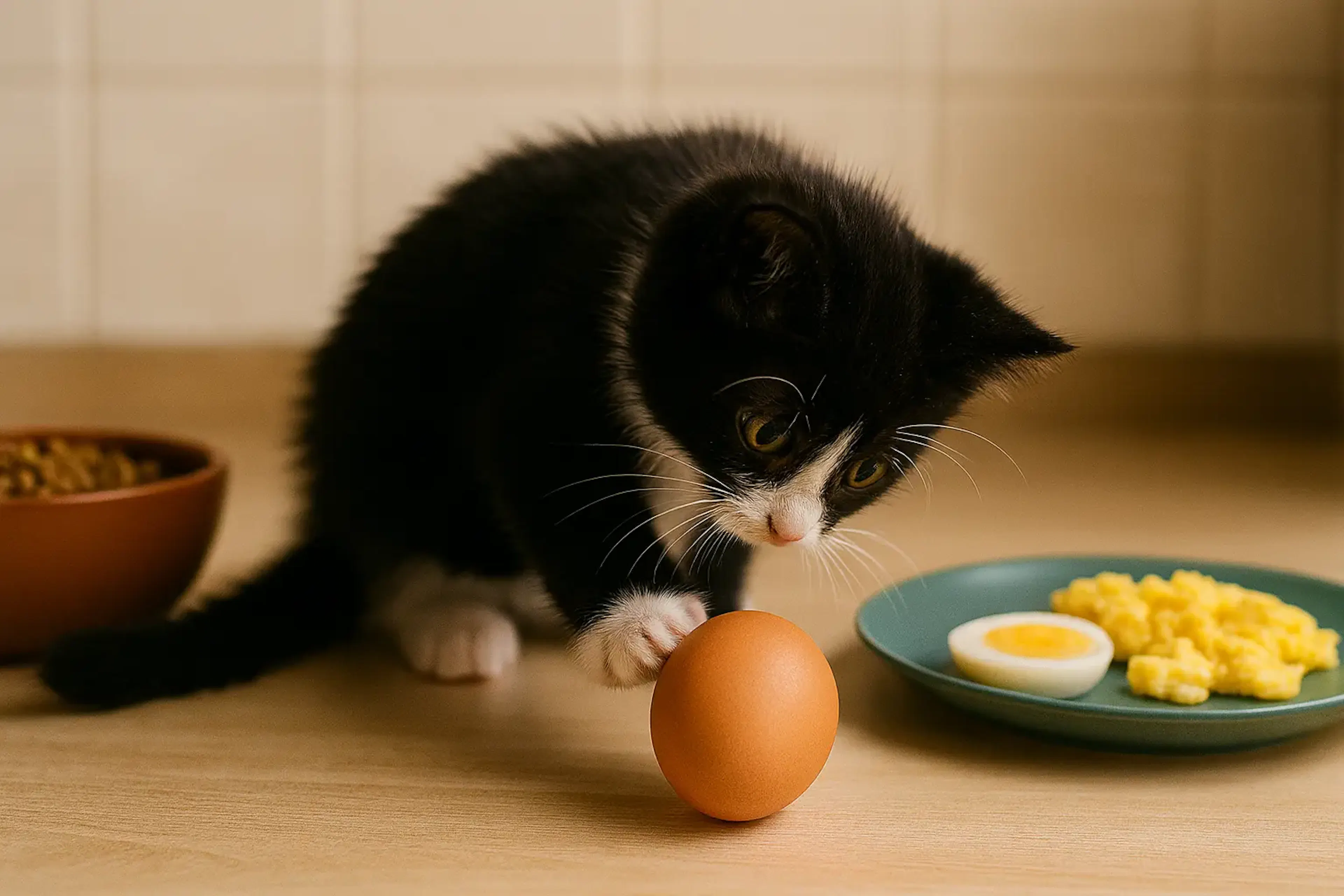
Can Cats Eat Raw Eggs?
Raw eggs are not safe for cats. They may harbor bacteria such as Salmonella or E. coli, which can cause vomiting, diarrhea, or more severe infections in both cats and humans. In addition, raw egg whites contain avidin, a protein that binds to biotin and interferes with its absorption.
Biotin is essential for maintaining healthy skin, nerve function, and coat quality. While a single exposure may not be dangerous, repeated feeding of raw eggs increases the risk of chronic biotin deficiency and gastrointestinal illness. Cats eat raw eggs more often in raw diets, but this practice remains controversial. Feeding raw eggs should be avoided unless directed by a board-certified veterinary nutritionist. Eggs should be cooked to an internal temperature of 160°F before being fed to cats to ensure safety.
Can Cats Eat Scrambled Eggs or Cooked Eggs?
Cooked eggs are generally safe for cats and can be a valuable source of high-quality animal protein. Scrambled, boiled, or poached eggs may be offered if they are cooked thoroughly and contain no salt, oil, butter, or seasoning. Cooking neutralizes avidin and destroys harmful bacteria, making eggs digestible and safe.
One large egg contains about 6 grams of protein, making it a nutrient-dense option. Cats eat cooked eggs best when they are plain. However, eggs should remain a supplement, not a core food, and must not displace the complete nutrient profile provided by a commercial dry cat food.
Can Cats Eat a Little Egg or an Egg Daily?
Occasional feeding of a small amount of egg is acceptable for most healthy cats.
A common guideline is to limit treats, including eggs, to no more than 10% of daily caloric intake. A whole large egg contains roughly 70–80 calories, which is too much for a small cat.
Egg yolks contain mostly fat with some protein, increasing calorie content for cats. Daily feeding of whole eggs can unbalance a cat’s diet and lead to excess fat or protein intake, especially if the rest of the cat's diet is already formulated to meet complete nutritional needs. When considering how much egg to offer, portion control and infrequent use are key.
Are Eggs Good for Cats with Diarrhea?
Cooked egg whites may be temporarily useful during mild diarrhea episodes due to their high digestibility and bland protein content. They contain almost no fat and can reduce digestive workload while providing amino acids. Egg whites are a lean protein source, making them a good option for cats.
However, egg yolks are high in fat and should be avoided during active gastrointestinal upset. Feeding eggs for diarrhea support is not a cure, and raw eggs should never be used. Eggs should not replace medical treatment, and long-term feeding of eggs alone is inappropriate.
Can Kittens Eat Eggs or Raw Egg Yolks?
Kittens can consume cooked eggs in small quantities, but raw eggs - including raw yolks - should be avoided entirely. Their immune systems and digestive tracts are still developing, making them more vulnerable to bacterial infections and nutrient absorption issues.
If kittens eat eggs, they should be fully cooked and incorporated into a larger, balanced feeding plan that aligns with AAFCO or FEDIAF growth standards. It is recommended to consult with a veterinarian before adding eggs to a kitten's diet, especially if the kitten has health conditions or shows signs of an allergy.
Are Egg Yolks Safe or Beneficial for Cats?
Cooked egg yolks provide some nutritional value, including vitamins A and D and fats. The vitamins in eggs support a healthy nervous system and strong bones in cats. However, they are calorie-dense and rich in cholesterol.
In healthy cats, small portions of cooked yolk may be fed occasionally, but raw yolk should not be fed, and it should not be fed frequently. Overfeeding yolks increases the risk of weight gain and may cause digestive upset in cats sensitive to fat. Yolk use should always be limited and calculated against a cat’s daily energy needs. Cats eat egg yolks best when they are part of a planned, portioned meal.
Is There Any Nutritional Benefit in Eggs for Cats?
Eggs contain several nutrients beneficial to cats, including complete animal protein, all essential amino acids, riboflavin, selenium, and choline. Cats need 11 essential amino acids, and 10 of them are found in eggs. These support muscle maintenance, metabolic health, and neurological function.
Compared to many human foods, eggs are nutrient-dense. However, they lack key nutrients, such as taurine, and should not be considered a complete food source. Their best use is as a supplemental protein, safely prepared and portioned within a broader balanced diet. Cats can eat eggs for protein, but not for total nutrition.
Are Eggs Used in Dry Cat Food?
Yes. Eggs are commonly included in dry cat food formulations as “dried egg product” or “spray-dried whole egg.” These are fully cooked, pasteurized, and dehydrated into a powder, allowing precise nutritional calibration during production.
The inclusion of eggs enhances the overall protein quality of the formula by improving the biological value and digestibility of the amino acid profile. This is especially important when combining plant-based proteins, such as corn or rice, with animal sources to meet complete amino acid requirements.
Eggs also provide essential nutrients, such as choline, selenium, iron, and B vitamins, that support immune function, cellular metabolism, blood cell production, and skin integrity. These micronutrients are retained during spray drying when properly handled. Because manufacturers balance the entire formulation to meet AAFCO nutrient profiles, the added eggs do not introduce excessive calories, fat, or cholesterol.
Separately feeding eggs is unnecessary if they are already present in a complete dry food, and doing so may increase the risk of nutrient imbalance or excess calories.
Frequently Asked Questions
No. Egg mayonnaise contains salt, oils, preservatives, and additives unsuitable for cats. In addition, a cat eating egg mayonnaise is at risk of digestive issues or sodium overload.