

Can Cats Eat Raw Salmon? 5 Important Reasons to Avoid
Can cats eat raw salmon? Not recommended. Learn why (parasites, thiaminase), what's safe when cooked, and how salmon shows up in dry cat foods
Short Answer
Raw salmon is not recommended for cats.
Raw fish can contain parasites, bacteria, and thiaminase, which can deplete thiamine and harm a cat’s health.
If you want cats to eat salmon, use plain cooked salmon in tiny, infrequent portions as an occasional treat, never a big chunk or half fillet, and always keep the cat’s diet meat-first and balanced.
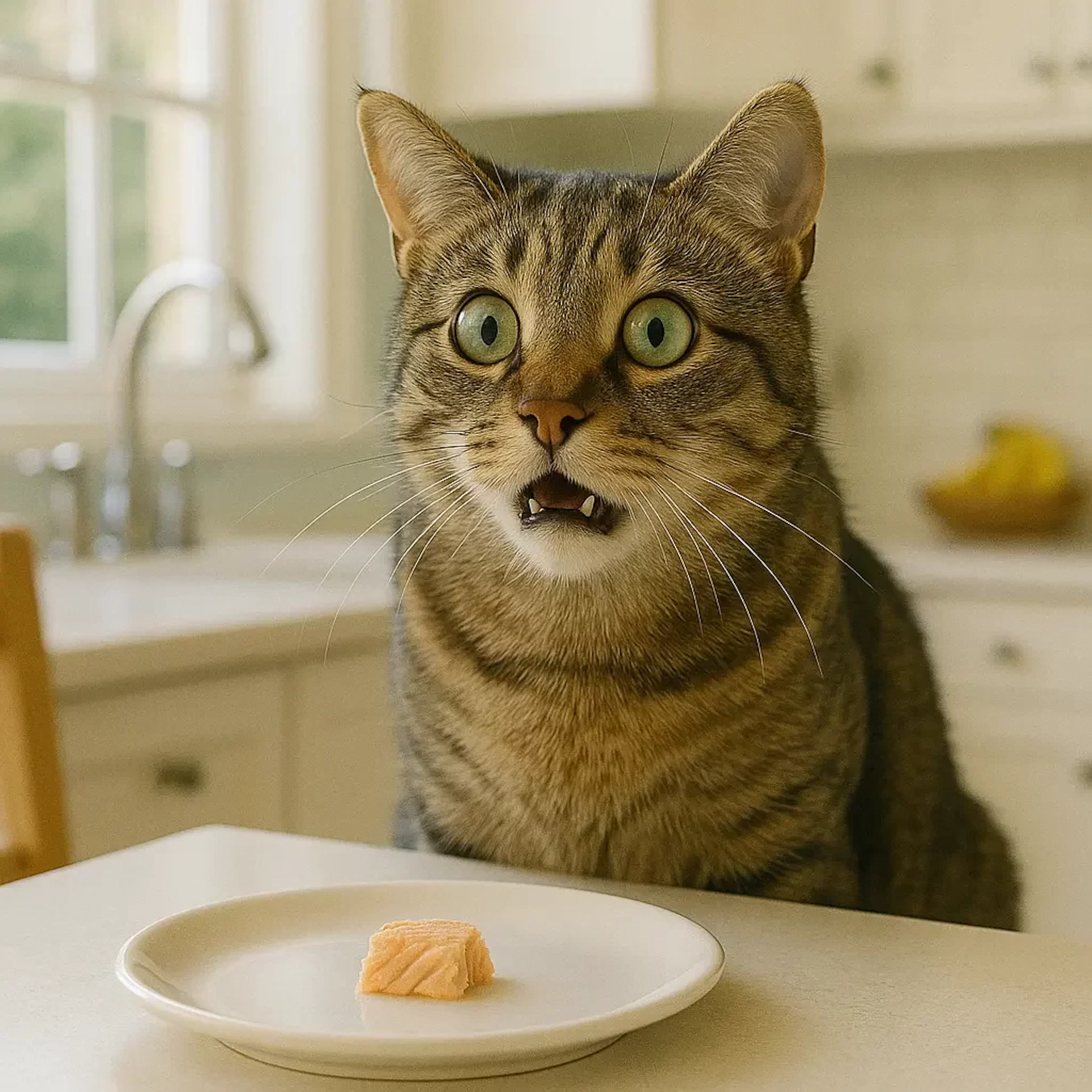
Raw Salmon: Main Risks
Raw salmon and other raw fish can introduce pathogens that trigger digestive issues, loss of appetite, and, in severe cases, neurologic signs from thiamine deficiency.
Cats can eat salmon safely only when it is prepared safely, meaning fully cooked, deboned, unseasoned, and cooled. If a cat eats raw salmon by accident, monitor closely and contact your vet if vomiting, diarrhea, or lethargy appear.
For more background on raw pet food and raw fish risks, visit the FDA guidance on raw pet food diets.
Cooked, Smoked, and Canned: What’s Safer?
Cooked salmon is the safer choice. It offers protein and marine fatty acids that support skin, joint health, and, indirectly, nervous system health. Cats eat salmon safely when portions are small and infrequent (see below).
Smoked salmon is different. It’s best to steer clear. Smoked salmon often contains added salt and other seasonings or spices; the higher sodium content can be a concern. Canned salmon is also tricky.
Cats can eat canned salmon only when the label indicates that it contains no added salt, oils, or flavorings. Many canned products include bones that pose a choking hazard. “Cat canned salmon” on a label doesn’t guarantee suitability - always read ingredients and steer clear of anything seasoned.
Skin, Bones, and Preparation Details (if you insist)
Salmon skin can carry fats and flavor, but cats eat salmon skin only when it is cooked, crisped lightly without added salt, and cut into tiny pieces. When cooked, salmon skin in small amounts is acceptable for some cats; avoid raw skin.
Bones must be removed before you feed salmon because bones increase the choking hazard and can cause oral or internal injury. Always prepare salmon by baking, boiling, or steaming until fully cooked, cool it, remove bones and skin, and serve the cat plain. Do not use oil, butter, added salt, or other seasonings.
Portions, Frequency, and Variety
How much salmon and how often? Keep portion sizes tiny and infrequent - salmon should be an occasional treat, not a daily staple.
Treats (including cooked salmon) should generally stay below 10% of the cat’s diet to keep a balanced diet. If a cat loves this favorite fish, rotate other fish or protein treats so you don’t feed your cat a single item repeatedly. If digestive issues occur, stop and consult your vet.
Benefits - Within Limits
When appropriately used, cooked salmon can be a delicious and nutritious treat. Cat salmon treats may provide omega-3 fatty acids that support a shiny coat, joint health, and anti-inflammatory properties, which may help aging cats.
Some owners notice improved eye health and overall comfort; however, these important nutrients also exist in complete diets and veterinary-approved supplements. To keep your cat healthy in the long term, prioritize complete foods; feed salmon only as occasional extras.
What About Salmon in Commercial Dry Cat Foods?
You’ll find salmon, salmon meal, or salmon oil in commercial cat foods. In dry food, these ingredients can contribute protein and fatty acids, but the total formula matters more than any single item.
Focus on overall protein quality, adequate taurine, and a balanced diet that meets established standards. Even if a label highlights salmon's good qualities or “cat salmon” flavors, still check the nutrient profile first.
Special Populations and Cautions
Kittens, cats with pancreatitis, kidney disease, or fish allergies need extra caution. Even plain cooked salmon can trigger food allergies in sensitive cats. For these cats, avoid feeding any salmon.
Frequently Asked Questions
Plain, cooked human-grade salmon can be safe in tiny portions. Avoid raw, smoked, or seasoned salmon, and remove all bones and skin. Treat only occasionally - never a staple.